July 29 – August 9, 2026
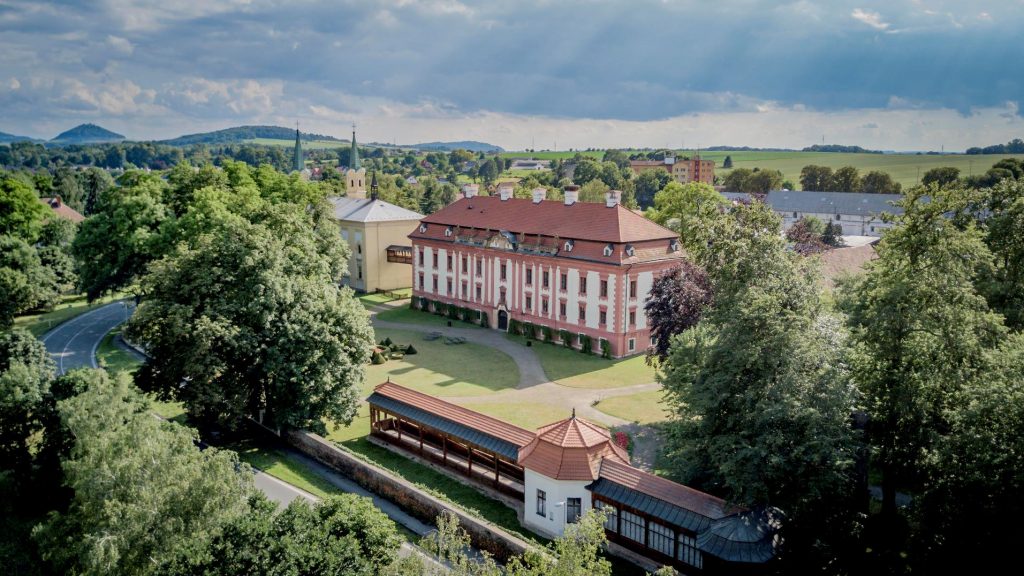
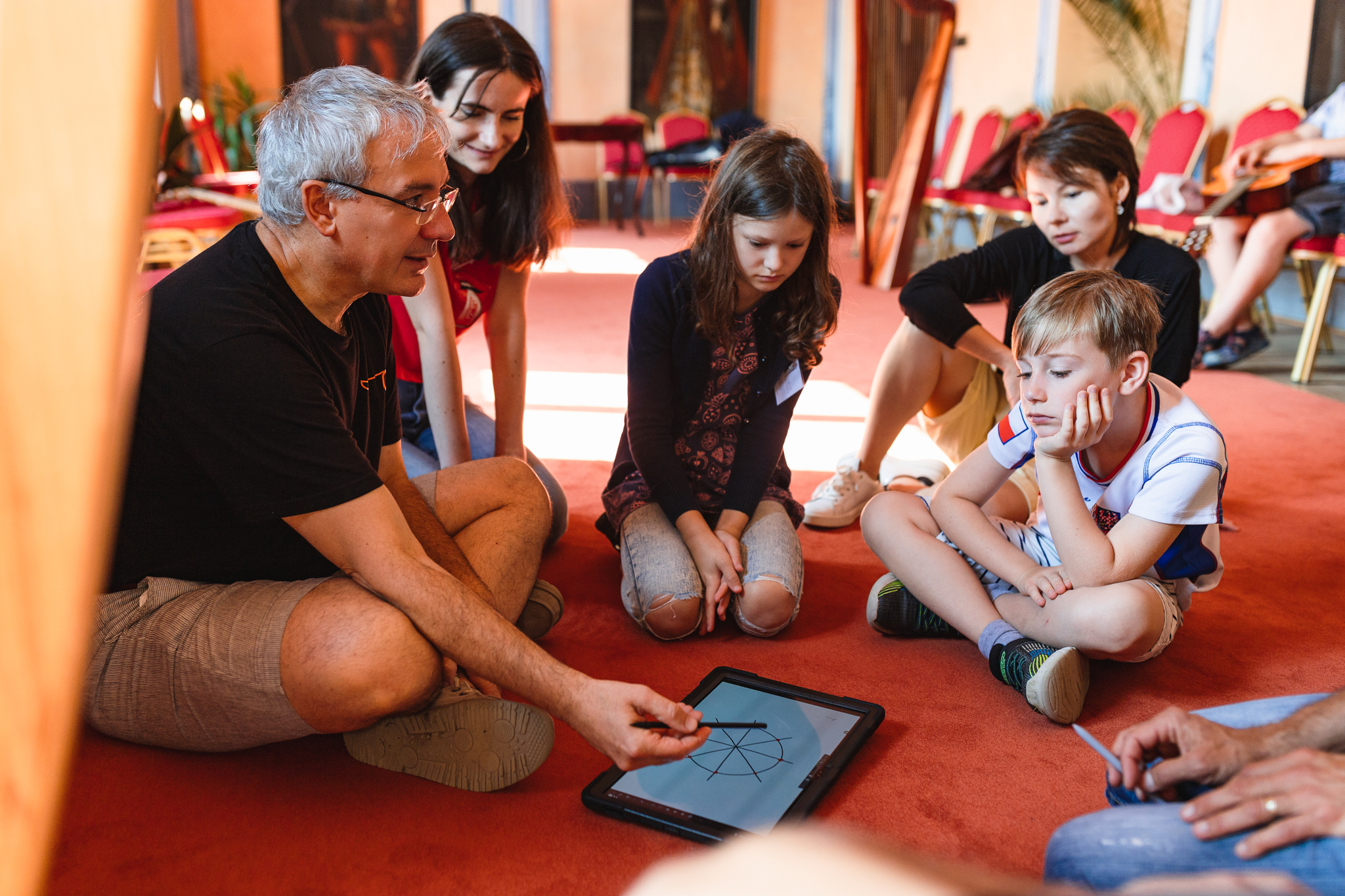
The 13th edition of the summer courses on the interpretation of Early Music at the Kunín château.
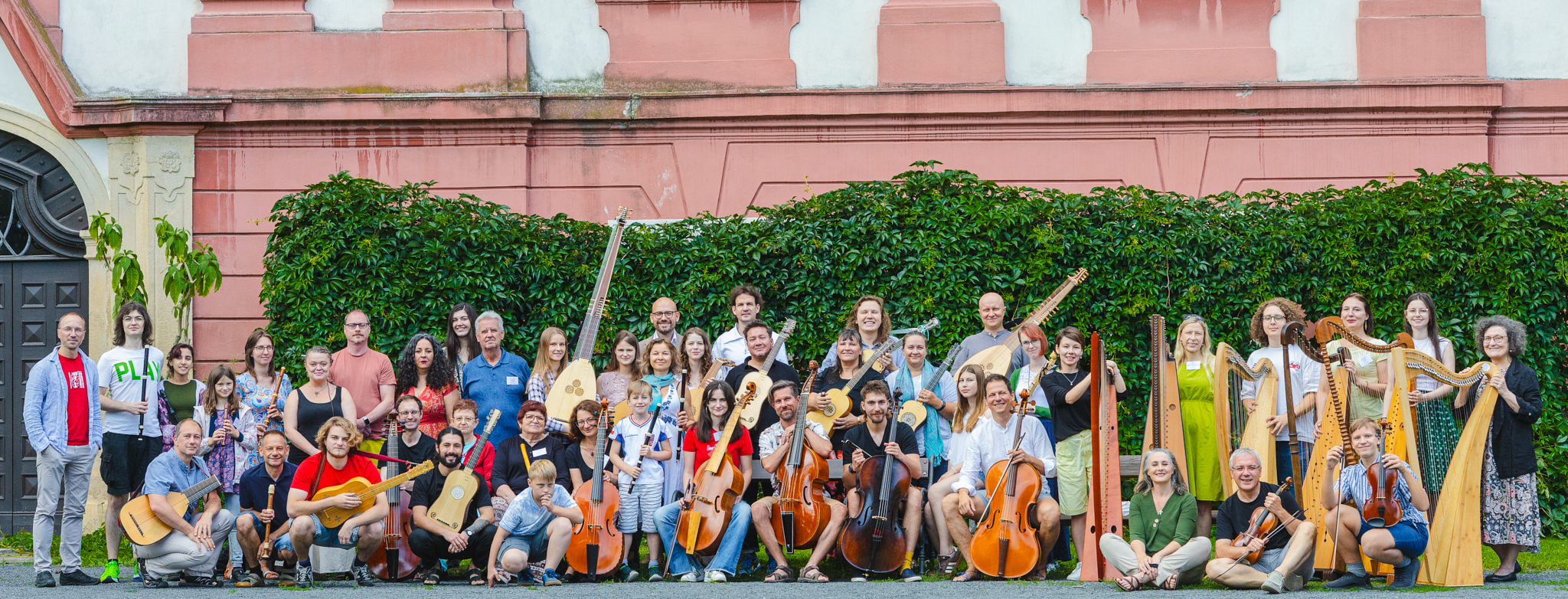
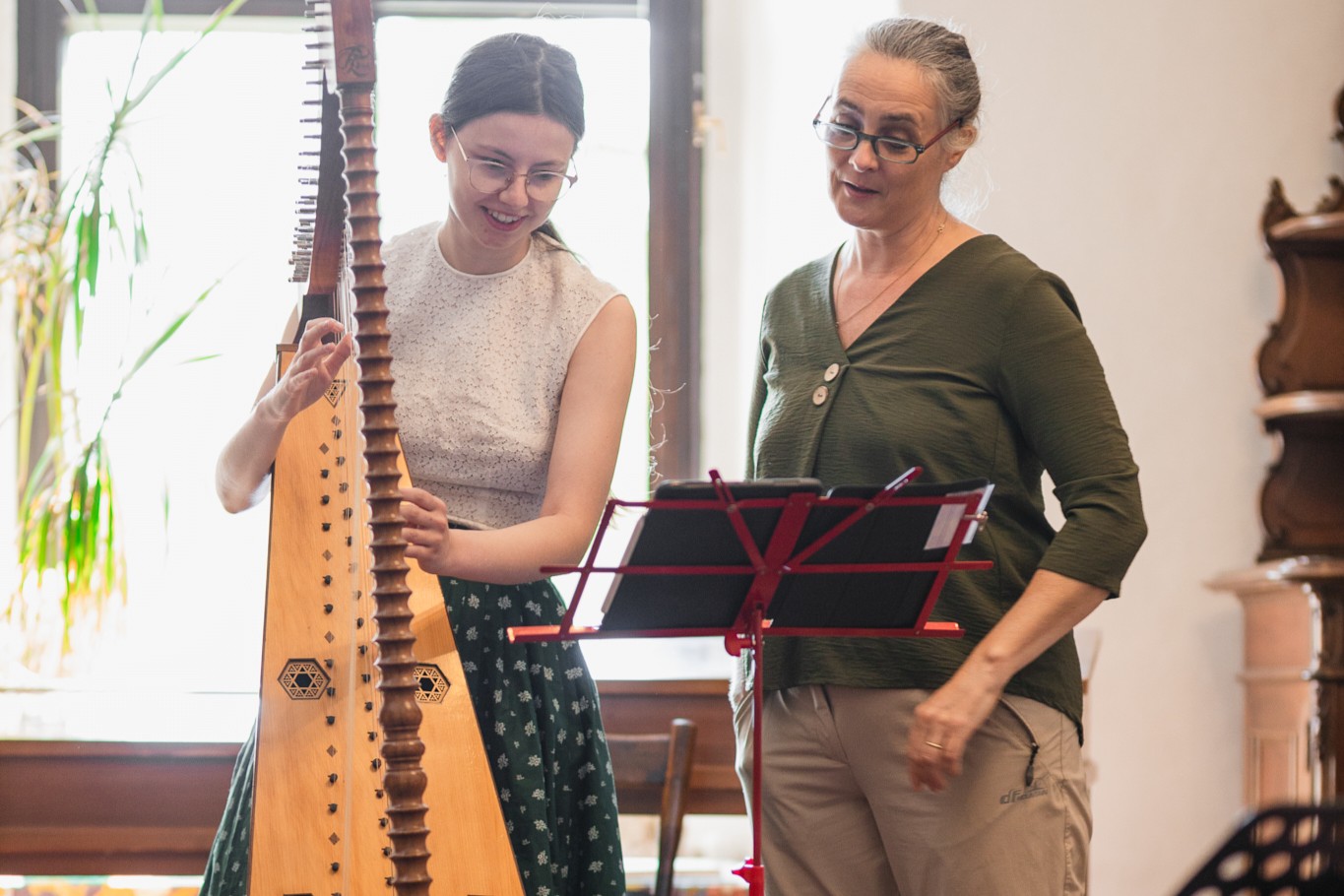
The course is intended for active participation by professionals, students from specialized music schools and for experienced amateurs with previous experience with early music. Active participation is also possible for players of modern instruments with a serious interest in music of earlier periods.
Passive participation is possible for anyone who is interested in baroque and renaissance music and its performance practice. Passive participants can follow the lessons in any of the classes and have free access to concerts and lectures.
For teachers in primary and secondary schools, we offer additional lessons in a course adapted according to the requirements for accreditation within the Ministry of Education’s system for further education for teachers (DVPP). The exact timetable and the calculation of additional lessons within the DVPP programme will be prepared individually based on the participant’s previous experience. Please contact us on musacad@email.cz for more information.
Course is organized by: Hudební lahůdky (Musical Delicacies) in co-operation with Česká loutnová společnost (Czech Lute Society) and Plaisirs de Musique.

We are grateful to the Kunin château (warden Mr. Jaroslav Zezulčík, Nový Jičín museum), the Kunín parish (Mons. Dr. Alois Peroutka), the diocese of Ostrava-Opava (organologist Mr. Jiří Krátký), restaurant U dobré hraběnky, and the management of Nový Jičín school farm under VFU Brno for goodwill and pleasant cooperation.




The development of our summer courses since 2014
Reports in media (only in czech language):
(2025) Česká televize – Interpretační kurzy staré hudby
(2022) Česká televize – Stará hudba zní zámkem v Kuníně
(2022) Polar TV – Zámek Kunín hostil mezinárodní kurz interpretace barokní a renesanční hudby
(2016) Česká televize – Kurzy interpretace staré hudby
(2014) Česká televize – Škola hry na barokní nástroje
LECTURERS AND SUBJECTS:
Martin Gester (FR) - harpsichord, organ, basso continuo, chamber music (29. 7. - 4. 8.)
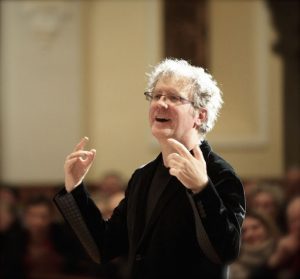
Harpsichordist, organist, and fortepianist Martin Gester came to music through singing. He pursues his passion for vocal art, both polyphonic and lyrical, as the leader of his Parlement de Musique, a flexible ensemble of singers and instrumentalists whose concerts and about 40 recordings showcase the European Baroque repertoire – often revelatory – from Monteverdi to Mozart.
As a guest conductor, Martin Gester conducts repertoire ranging from Monteverdi to classical symphonies, working as often as possible with specialist ensembles. A unique collaboration has been established with the baroque orchestra Arte dei Suonatori (Poland) around the baroque concertos they record for the Swedish label BIS (notably: Handel, 12 Concerti grossi op. 6, cited as a ‘new benchmark’ by international critics: Diapason, BBC, Toccata-Alte Musik, etc.).
But Martin Gester is equally fond of the intimacy of his keyboards, often surrounded by musicians chosen to perform Monteverdi’s madrigals, Couperin’s motets and Concerts Royaux, or chamber music by Bach, Haydn and Mozart.
His recent recordings as a soloist: Les Partitas pour clavecin (Clavierübung 1, Ligia 2014) and 18 grands Chorals de Leipzig & Variations Canoniques (Paraty) are the culmination of his research into the mysteries of Baroque art and thought and the work of JS Bach. These were followed by Portraits et Caractères, works for harpsichord and violin by Duphly and Mondonville with Stéphanie Pfister, and Sinfonies au Salon by Johann Schobert on the Silbermann fortepiano and harpsichord with Arte dei Suonatori.
Martin Gester is increasingly returning to his first instrument, to which he has devoted numerous recordings (J.S. Bach, Muffat, Handel, Vivaldi, Sammartini, Du Mage, F. Couperin, Steigleder… notably for Tempéraments/Radio-France).
He teaches harpsichord and organ performance and, for singers, specialisation in the Baroque repertoire at the Conservatoire and the Académie Supérieure de Musique in Strasbourg, at the Opéra Studio of the Opéra national du Rhin and in masterclasses on various continents (Germany, Poland, Czech Republic, Italy, Australia, Japan).
Teaching languages: EN, FR, ES.
Aline Zylberajch (FR) - harpsichord, basso continuo, chamber music (29. 7. - tba)
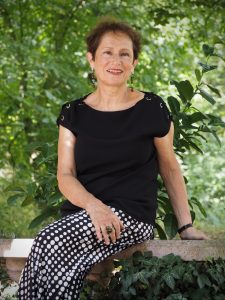 A graduate of the Conservatoire National Supérieur de Musique, Paris, and of the New England Conservatory of Music, Boston, Aline Zylberajch started her career as a harpsichordist. She contributed to the early productions of ensembles such as La Chapelle Royale, Les Musiciens du Louvre and Le Parlement de Musique, with which she performed numerous operas and oratorios.
Later, her interest in the music of the late 18th century led her naturally to an intensive involvement in the performance practice of the early piano, discovering at the same time the amazing variety of keyboard instruments that flourished all over Europe. This period, which also saw the increasing popularity of duos, trios and quartets with obbligato keyboard opened up a whole new field of research into chamber music, and new happy musical encounters.
One of her other addictions is playing vocal music, from early Baroque songs to Lieder evenings, and listening to the many ways this flows through to keyboard repertoire.
Sharing through teaching has always been an important part of Aline’s musical life.
Until 2025 she taught at the Pedagogy department of Conservatoire National de Musique de Paris and at the Early Keyboard Department of the conservatoire and Haute École des arts du Rhin in Strasbourg.
She has been invited to give masterclasses and perform in many European countries, as well as Australia, Japan, Mexico and USA.
Her recordings have received much praise in Diapason, Classica, Gramophone, Early Music Review, Répertoire, le Monde de la Musique, etc.
She is artistic advisor for the Ruckers harpsichord at the Unterlinden museum in Colmar and chairs Clavecin en France, the French harpsichord association.
Teaching languages: EN, FR, ES.
Beatriz Lafont (ES) - solo singing, castanets (4. - 9. 8.)
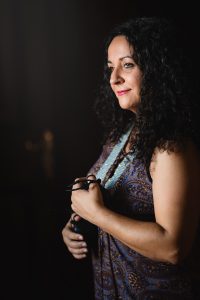
Beatriz Lafont Murcia is a Spanish soprano and guitarist from Valencia, specialized in early music performance. She began her musical training in Guitar and Singing at the Conservatorio Profesional de Música de Valencia and the Conservatorio Superior de Música Joaquín Rodrigo in Valencia. During this period, she received several awards, including the Public Prize and the Best Performer from Valencia Prize at the Certamen Internacional de Guitarra Luys Milán in Vila de l’Olleria.
Supported by a scholarship from the Valencian Institute of Music, she moved to the Netherlands, where she completed both her Bachelor’s and Master’s degrees in Early Music (Vocal Performance) at the Royal Conservatory of The Hague. There, she developed a strong specialization in early Italian Baroque repertoire, with particular focus on singing while accompanying herself on the theorbo. Her vocal studies were guided by Rita Dams, Michael Chance, Jill Feldman, and Peter Kooij, while she studied theorbo with Mike Fentross and Joachim Held. She further enriched her artistic development through masterclasses with Robert Expert, Marta Almajano, Cristina Miatello, Evelyn Tubb, Lambert Climent, Stephen Van Dyck, Johannette Zomer, Fred Jacobs, and Margreet Honig.
Beatriz Lafont has performed extensively across Europe, collaborating with ensembles such as Capella de Ministrers, Música Florea, Afectos Diversos, Acorte Musical, La Esfera Armoniosa, Música Poetica, Burgos Baroque Ensemble, and Música Temprana. She has appeared at numerous international festivals, including the Festival de Música Antigua de Peñíscola, Festival de Música Antiga: Música, Història i Art (Valencia), Fringe Festival Oude Muziek (Utrecht), Festival Classique (The Hague), Festiwal Twórczości Religijnej (Poland), Dag Oude Muziek (Bilzen), Edizione Pievi & Castelli in Musica (Italy), and Kasteelconcerten in the Netherlands, among others.
Her discography includes recordings of early music repertoire with Música Temprana, Harmonia del Parnàs, and Capella de Ministrers, and her work has been featured in various radio broadcasts.
Alongside her performing career, Beatriz Lafont is deeply committed to music education. She regularly teaches classical and early music singing through lessons and masterclasses in the Netherlands, Spain, and the Czech Republic. She has taught at the Conservatori Isaac Albéniz in Girona and has been a faculty member at the Summer Course on the Interpretation of Early Music in Kunín, as well as at the International Summer School of Early Music in Valtice (Czech Republic), where she has been teaching since 2014.
This class delves into Spanish, English, and Italian music from the Renaissance and Early Baroque periods. Lessons will emphasize not only technical improvement where needed but, more importantly, the stylistic nuances, ornamentation, and interpretation of the text. Each individual lesson is designed to last 45 minutes, providing focused, personalized guidance to enhance your understanding and performance of early music.
Suggested repertoire for this class includes works by composers such as Giulio Caccini, Girolamo Frescobaldi, Claudio Monteverdi, Jacopo Peri, Sigismondo D’India, Francesca Caccini, Luis de Milán, Luis de Narváez, José Marín, Juan Hidalgo, Sebastián Durón, John Dowland, Robert Johnson, and other prominent figures from the Renaissance and Early Baroque periods.
Teaching languages: EN, IT, ES.
Maria Christina Cleary (IR / IT) - harp, basso continuo (5. - 9. 8.)
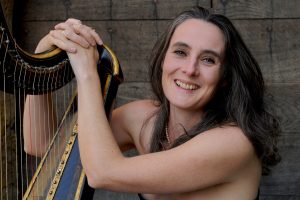
Native of Ireland, Maria Cleary holds degrees from Dublin, London (Trinity College), Den Haag and Bruxelles. She studied harp with Susanna Mildonian and Andrew Lawrence-King. She is currently completing an artistic Ph.D. at Leiden University, The Netherlands.
She has performed as soloist with, among others, Amsterdam Baroque Orchestra, American Bach Soloists, Bayerische Staatsoper, Portland Baroque Orchestra, Arion Ensemble Montreal and the RTE Concert Orchestra. In 2014, Maria was invited to perform a Concerto by J. B. Krumpholtz with the Orchestra of the Antipodes at The World Harp Congress in Sydney. This was the first time the harpe organisée was featured at the Congress. As soloist she was prize winner at Utrecht Early Music Competition (1997), Nippon International Harp Competition (1996), Dutch National Harp Competition (1997). She participated at the International Harp Competitions in Israel, Geneve, Bruxelles and Madrid.
As an orchestral player she has worked as Principal Harpist in the Koninklijk Concertgebouw Orkest Amsterdam and further held the position of Harpist at the RTE Concert Orchestra Ireland and worked in numerous orchestras in The Netherlands and Germany. Maria has worked for years in the area of contemporary music, with MusikFabrik Köln and Remix Ensemble Porto. She has premièred over fifty pieces for solo harp and harp in ensemble, including Arc Song by T. Hosakawa at the Darmstadt Festival in 2002 with Peter Veale (oboe).
Specialising in historical harps, Maria performs on medieval harps, the Italian arpa doppia, the Spanish arpa de dos ordenes and the 18th century harpe organisée. She promotes a pedal technique that was exclusively used on harps with a single-action pedal mechanism. She has performed with most Baroque ensembles throughout Europe. Maria performs regularly with Davide Monti under the name Arparla, a violin/harp duo specialising in the repertoire from the 17th century to the 19th century.
Maria teaches historical styles, improvisation and chamber music to both modern and historical harpists. She has taught at the Guildhall School of Music London, Conservatories of Singapore, Brisbane, Venice, Padova (2005–2008), Krakow Academy of Music, Sibelius Academy Helsinki and the Haute École de Musique de Genève. She holds the position of historical harp professor in Verona Conservatory, Italy. In 2016 she will give a masterclass at the Juilliard School of Music New York.
Teaching languages: EN, DE, NL, ES, IT, FR, PT.
Davide Monti (IT) - violin, improvisation, historical pedagogy (5. - 9. 8.)
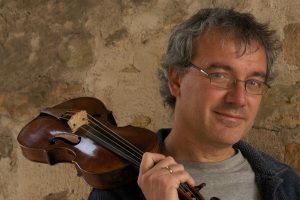
After his Primary Degree from the Conservatory in Parma, Davide Monti specialised in Early Music with numerous professors (E. Gatti, E. Parizzi, S. Richie, M. Huggett). Davide’s playing has evolved thanks to collaboration with great musicians of our time: from Ton Koopman to Alberto Rasi, Vittorio Ghielmi to Michael Radulescu, Marcello Scandelli to Roberta Invernizzi, Gemma Bertagnolli to Stefano Veggetti, Stefano Montanari to Sergio Vartolo.
As leader of many ensembles he is known for his energy and charisma, creating a special sound in an orchestra. He has been leader of numerous orchestras including The European Baroque Orchestra (EUBO), Il Tempio Armonico, Athestis e Accademia de li Musici, Il Complesso Barocco, Cordia, Teatro Armonico. He is noted for his work with small chamber groups and chamber orchestras including Accademia Strumentale Italiana, Ensemble il Falcone, le Parlement de Musique and Arparla with the harpist Maria Christina Cleary, — encounters that are precious moments for research and experimentation.
This formed the idea of the score being a canvas, every performance and interpretation is different. Supporting this philosophy, he focuses on the Art of improvising; as in Early Music performing practise the experience of improvising is paralleled to other branches of “cultured” Art (jazz, theatre, traditional music, dance).
Davide has given Masterclasses in Japan, lectured at Makerere University and in Kampala, and at Summer Courses in Italy. He performed as Soloist with the Orchestra of the Arena in Verona. He has recorded for many record labels: Agorà, Bongiovanni, Brilliant, Deutsche Harmonia Mundi, Dynamics, Naive, Opus 111, ORF, Radio Svizzera Italiana, Sonica, Stradivarius and Tactus. He performs throughout the world (America, Africa, Europe, Japan) and received great acclaim in Argentina and Brazil as director and soloist.
Teaching languages: EN, FR, IT, (ES).
Marta Kratochvílová (CZ) - baroque and renaissance traverse flutes, historically informed interpretation on modern traverso and recorder (29. 7. - 9. 8.)
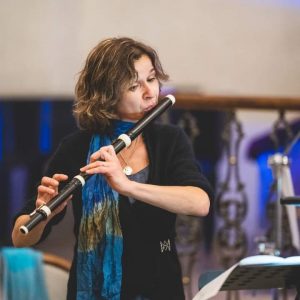
Marta Kratochvílová studied flute at the Conservatory in Pardubice and then at the Janáček Academy of Performing Arts in Brno. In 2000 began her studies in France at the Conservatoire National de Région de Strasbourg, where she specialized in baroque and renaissance flute with Jean-François Alizon and Nancy Hadden, and chamber music with Martin Gester and Patrick Blanc. She has participated in masterclasses and workshops by prominent figures such as Paul McCreesh, Barthold Kuijken, Jan Latham-Koenig and Sir Neville Marriner. In France until 2010, she played baroque and renaissance flute extensively in the ensembles Le Parlement de Musique Strasbourg, Bohemia duo and NotaBene. She also performed renaissance workshops (Ferrara, Munich, Stuttgart, Basel) with a consort of traverso players from Strasbourg.
Today she lives in the Czech Republic and performs regularly throughout Europe. She appears in mostly chamber and solo projects with artists such as Jan Čižmář, Karel Fleischlinger, Joel Frederiksen, Martin Jakubíček, Petr Kolař, Ján Krigovský, Marcin Świątkiewicz, Marc Vonau, Petr Wagner, and with the ensembles {oh!} Orkiestra Historyczna and Plaisirs de Musique, of which she is a founding member. She is also artistic leader of the renaissance flute consort Tourdion.
As a teacher with many years of experience she is invited to presentations and masterclasses throughout Europe; she teaches also privately baroque and renaissance traverso playing and interpretation.
Teaching languages: CS, FR, (DE), (EN).
Jan Čižmář - lute, guitar, vihuela, theorbo and other plucked instruments, basso continuo (29. 7. - 9. 8.)
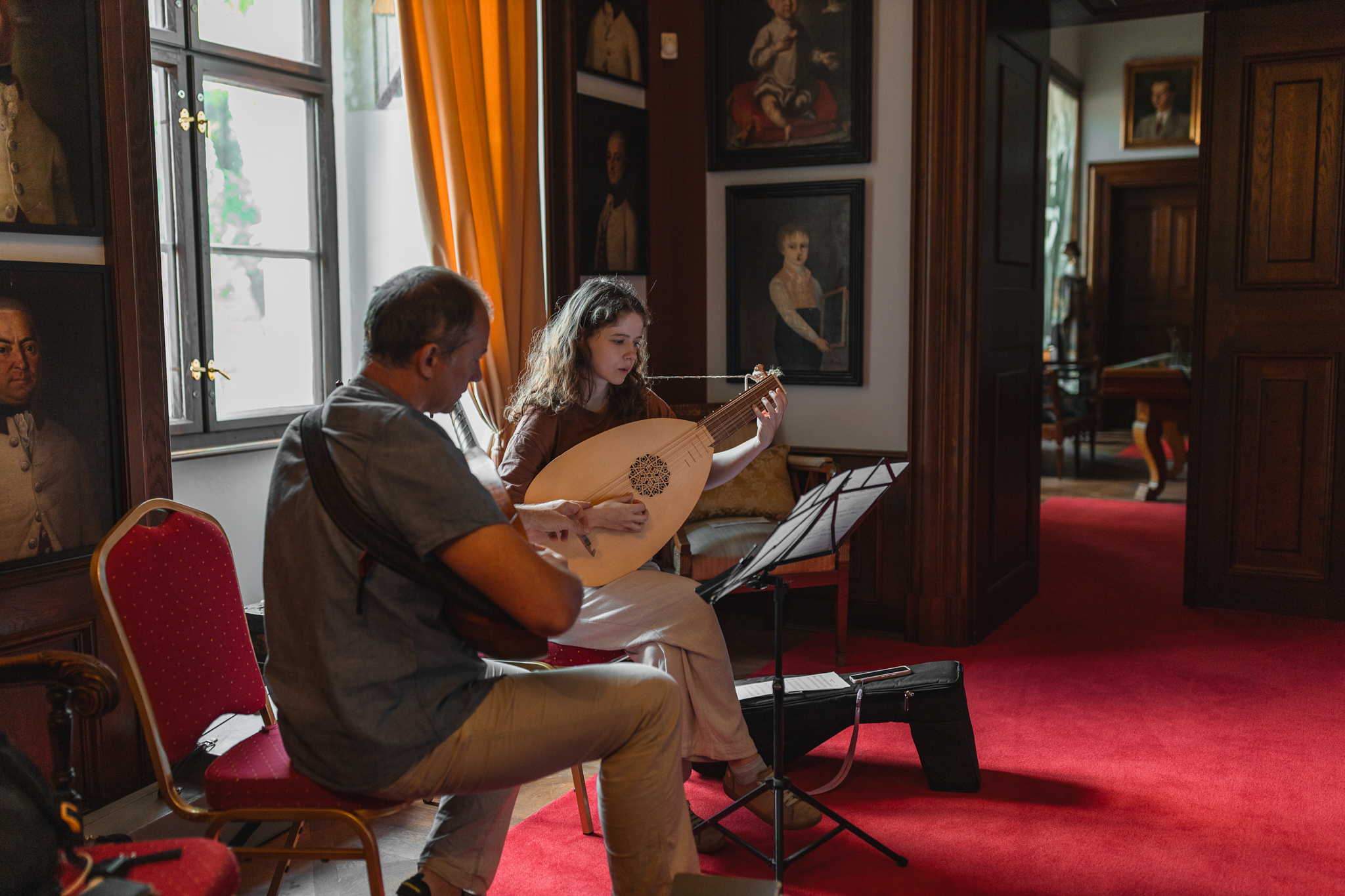
The course is open to players on any historical plucked instruments (various forms of lutes and guitars, vihuela, theorbo, mandora, cittern) with any repertoire. Also welcome are guitarists with no previous experience of playing historical instruments. Instruments will be available for loan on site. Any repertoire is welcome. It is also possible to focus on perfecting the art of playing the basso continuo on a wide variety of plucked instruments – basic knowledge of harmony is required here. We will also do some ensemble playing with (not only) renaissance lutes and in mixed consort.
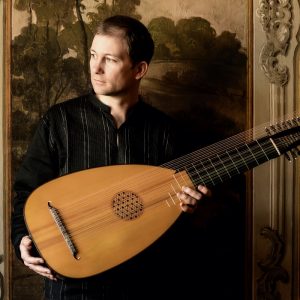
Jan Čižmář is a versatile performer focusing on historical plucked instruments. He performs regularly in Europe, Asia and the USA with ensembles such as Royal Concertgebouw Orchestra, Orchestra of the Age of Enlightenment, Orchestra of the Eighteenth Century, Rotterdam Philharmonic Orchestra and Capella Cracoviensis, and under conductors such as Frans Brüggen, Christopher Hogwood, Giovanni Antonini, Yannick Nézet–Séguin and Christina Pluhar. He appears also as soloist with of baroque and renaissance repertoire, and is the artistic leader of the ensemble Plaisirs de Musique.
After graduation in guitar and musicology in his native Brno he studied at the Royal College of Music in London, where he began playing the lute in the class of Jakob Lindberg. He continued his studies at the Royal Conservatory of The Hague with the teachers Nigel North, Joachim Held, Mike Fentross and Christina Pluhar.
He was the founder and editor of the Czech guitar magazine Kytara and contributes regularly to other musical periodicals. He is also intensely involved with publishing and research activities in the field of early music.
Jan Čižmář taught lute and related instruments at MUK Wien, JAMU Brno and AAM at MU in Brno; currently he is teaching at the the Karol Szymanowski Academy of Music in Katowice in Poland. He regularly gives courses and masterclasses in Europe and overseas.
Teaching languages: CS, EN, PL, DE, (FR).
Krzysztof Firlus (PL) - viola da gamba, ensemble, gamba consort (29. 7. - 1. 8.)
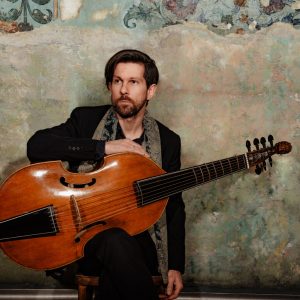 Krzysztof Firlus combines his artistic career as a gambist and double bassist, both as a soloist and as a member of chamber music ensembles and orchestras. He studied with Vittorio Ghielmi at Mozarteum in Salzburg and with Mark Caudle at the Academy of Music in Katowice. His musical career is linked to the Polish National Radio Symphony Orchestra in Katowice, the {oh!} Orkiestra Historyczna ensemble, and the Ensemble Extempore. He has also collaborated with the Silesian Quartet, Le Poème Harmonique, BachAkademie Stuttgart, Marek Toporowski, Martyna Pastuszka, and others. His recordings include the CD Gamba Sonatas, which he recorded with his wife Anna Firlus, C. F. Abel – Sonatas from the Maltzan Collection, Music of the Warsaw Castle – Music of French Masters ({oh!} Orkiestra Historyczna), Telemann – Solos and Trios (Ensemble Extempore), “Tansman – from Trio to Octet” (Silesian Quartet), “Music in Dresden in the Times of Augustus II the Strong,” and Lithuanian Birbyne: Seventeenth Century Music of Poland and Lithuania (M. Toporowski). He currently teaches viola da gamba at the Academy of Music in Katowice and double bass at the Academy of Music in Krakow.
Marian Friedl - folk flutes, small dulcimer, bagpipe, Carpathian alphorn, Moravian folk music - individual lessons, workshop (5. - 9. 8.)
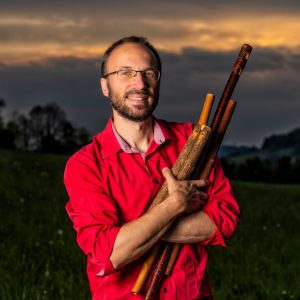 With his free approach to music of all genres, Marian offers consultations to players of recorders and other wind and other instruments. Particularly suitable for conservatory students and teachers, as an inspiration and practical encounter with less common improvisational and folk styles. The lecturer will also answer technical questions about playing recorder and other wind instruments, but his domain is also some stringed instruments. The free instrument par excellence, the overtone flute, will also be available to try out.
Marian Friedl, musician, ethnomusicologist, pedagogue, member of several music projects of various specializations, in which he sings, plays the double bass, folk flutes, bagpipes, clarinet, small dulcimer and other instruments. He has performed on more than two dozen CDs, often with leading performers from the Czech scene and abroad. In 2014 he recorded, for example, the album NOCZ and Iva Bittová (Hevhetia), in 2016 Divé Husy with Jitka Šuranská and Martin Krajíček (nominated for the Anděl Music Award 2016) and in the same year the album Mateřština with Jiří Slavík (Anděl award 2016 in the World Music category). He embodied his personal vision of Moravian World Music in his self-conceived project Lambs and Wolves; the album of the same name won the Anděl 2017 award in the Folk category. In 2019 he released his solo album Beskydská Odysea (Indies Scope), the neo-folklore project Píseň ZEMĚ (Animal Music), and also performed as sideman on albums of the Norwegian-Czech group NOCZ and Choir (Hevhetia) and in the project Slovak Dances of the composer and conductor Peter Reiner (Naxos).
CHAMBER MUSIC SUBJECTS AND WORKSHOPS:
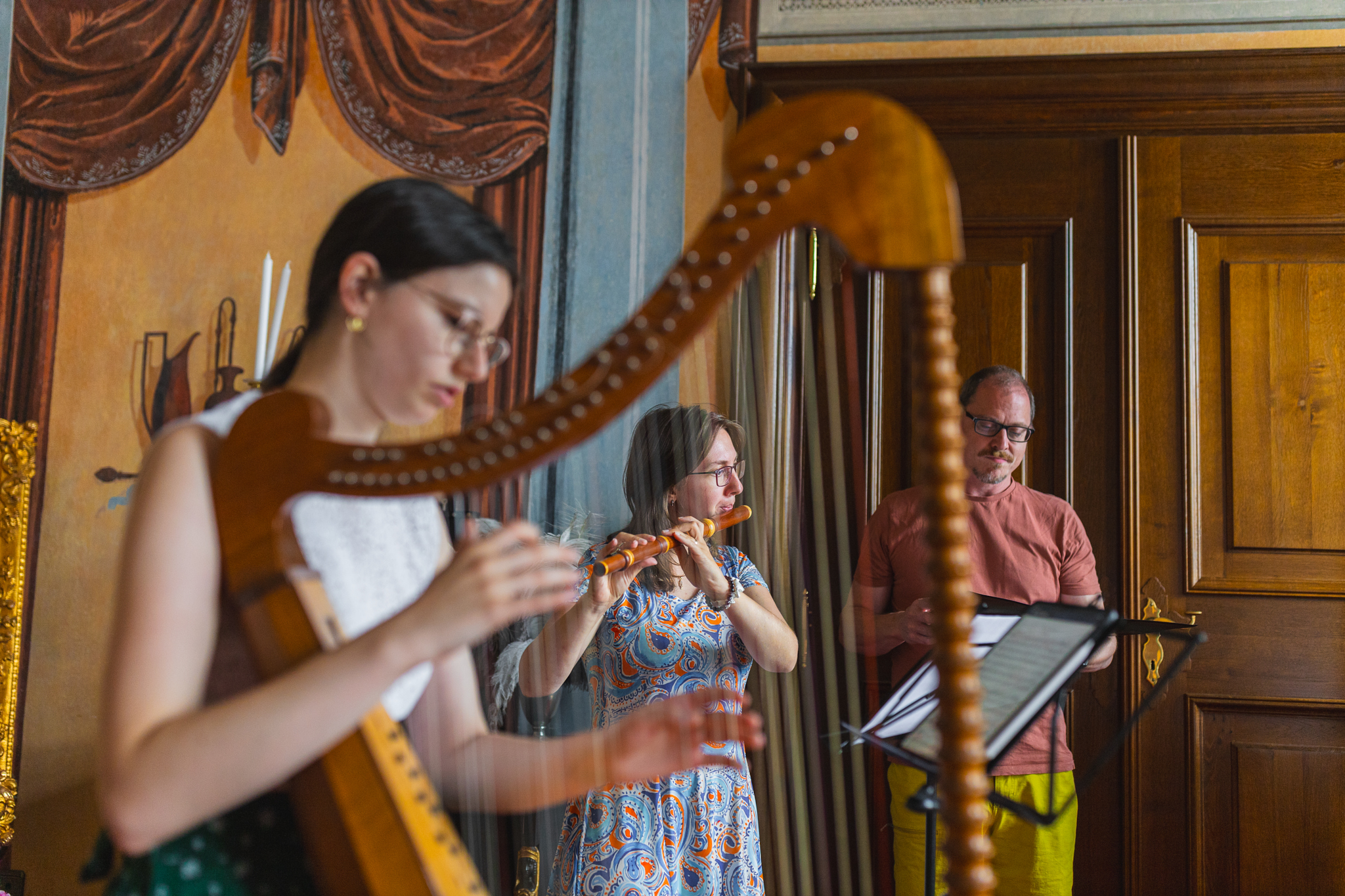
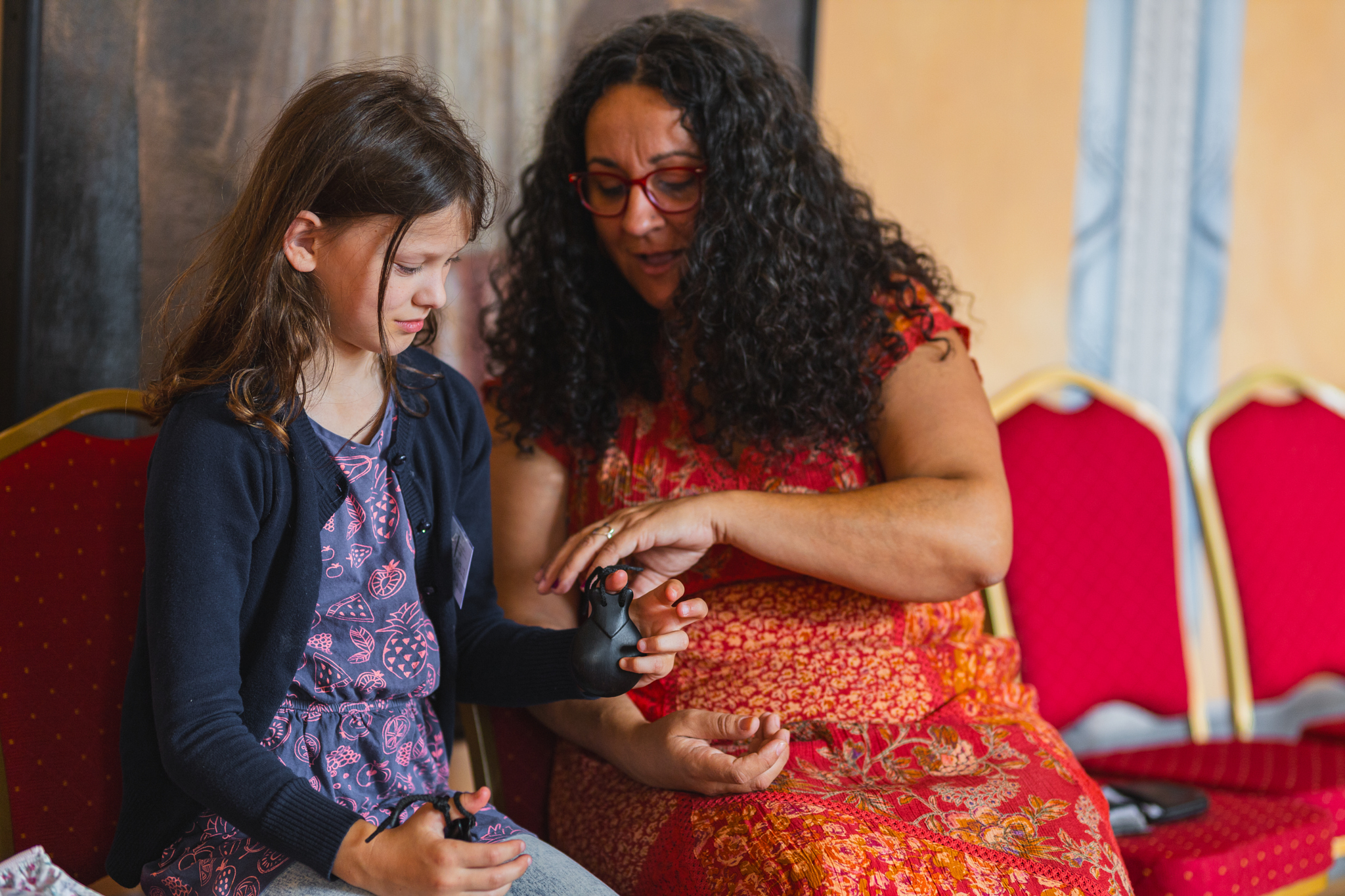
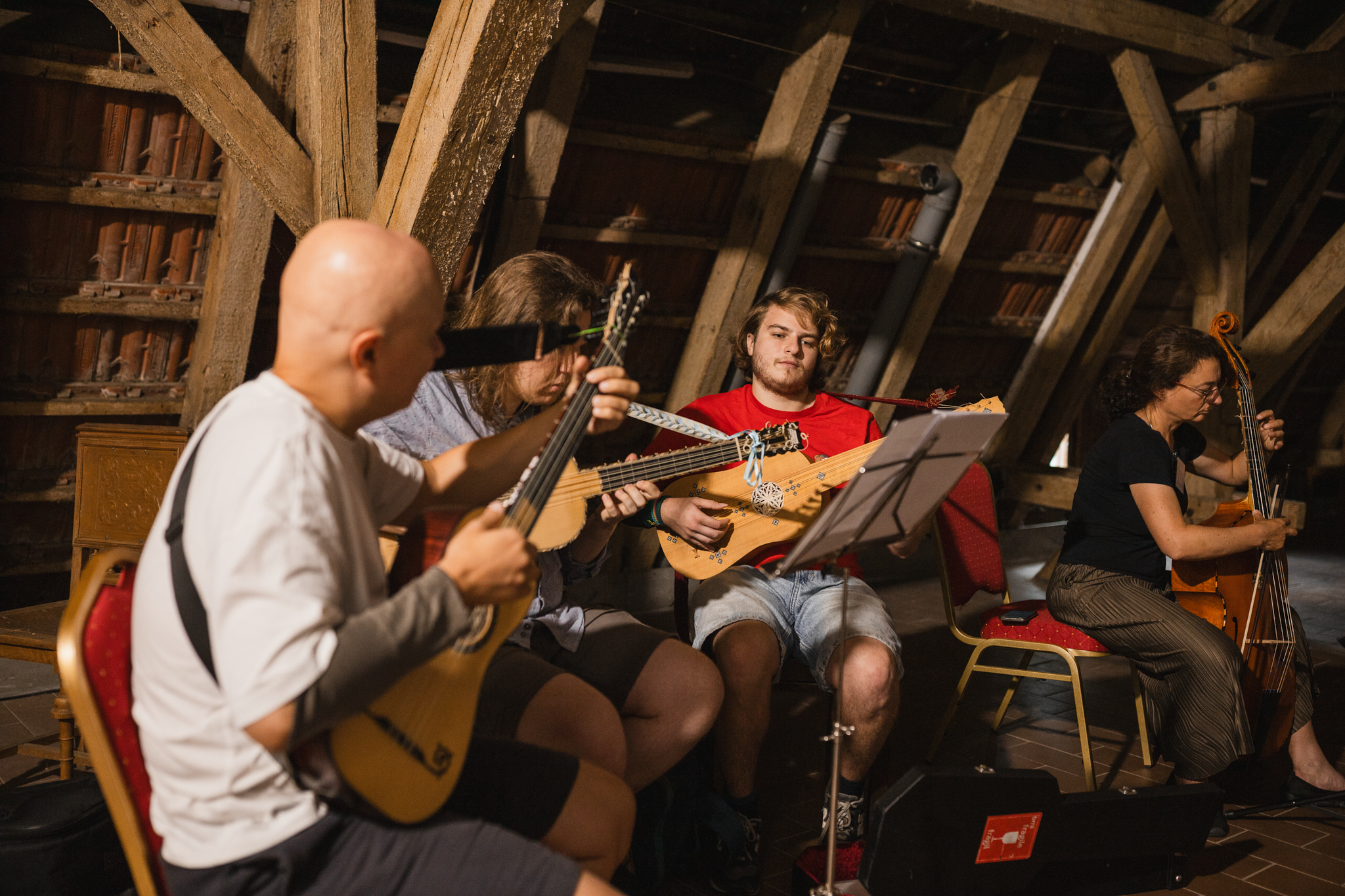
Chamber Music (29. 7. - 31. 8.)
You can come with any music you like – or we can recommend something suitable for your ensemble. You can come with a preexisting ensemble or we put you together in an ensemble with other participants. Harpsichord players can also train their basso continuo skills. Work on the chamber repertoire will be under direction of any tutor and in any time allotment.
Recommended time per ensemble: 8 lessons (approx. 4 x 90 minutes).
Vocal ensemble - Beatriz Lafont Murcia, Martin Gester (29. 7. - 9. 8.)
Planned duration: 4 teaching units.
Improvisation - Davide Monti (5. - 9. 8.)
Planned duration: 16 lessons (approx. 4 x 180 minutes).
Historical Pedagogy - Davide Monti (5. - 9. 8.)
Renaissance Traverso Consort - Marta Kratochvílová (29. 7. - 9. 8.)
Planned duration: 8 teaching units (approx. 4 x 90 minutes).
Lute & Harp Consort - Jan Čižmář, Maria Christina Cleary (29. 7. - 9. 8.)
Instruments available for students by prior arrangement.
Planned duration: 8 teaching units (approx. 4 x 90 minutes).
Gamba Consort - Krzysztof Firlus (29. 7. - 1. 8.)
Instruments available for students by prior arrangement.
Planned duration: 8 teaching units (approx. 4 x 90 minutes).
Basso Continuo workshop - Jan Čižmář, Maria Christina Cleary, Aline Zylberajch (29. 7. - 9. 8.)
Planned duration: 6 teaching units (approx. 3 x 90 minutes).
The project will be under the guidance of different lecturers.
Castanets workshop - Beatriz Lafont Murcia (4. - 9. 8.)
Planned duration: 8 teaching units (approx. 4 x 90 minutes).
Workshop about (and with) the old musical instruments from Beskydy Region - Marian Friedl (5. - 6. 8.)
Forgotten musical instruments come to life in the hands of the well-known Beskydy bard Marian Friedl. Listen to a story about them, hear how they sound, play, get inspired!
The workshop will present all the folk instruments from Marian’s instrumentarium and place them in a broader organological context through the following topics:
1) Trumpet instruments (natural trumpets, horns) + A bit of history (Carpathian Arch as a bridge)
2) An alto overtone flute + a bit of acoustics (sound, tones, noises, harmonic series)
3) Flutes with three tactile holes + A bit of organology I (flute-type instruments)
4) Flutes with six and eight finger holes, double flutes + A bit of music theory (modal thinking)
5) Cymbal instruments + A bit of organology II (chordophones)
6) Other wind instruments + A little organology III (aerophones)
The basis of the workshop is practical experience – this can be gained through your own instruments and/or instruments from Marian’s instrumentarium. You will learn unfamiliar folk songs and try out different performance possibilities (parlando, microtiming, microinterval, fuzz, ornamentation, rhythmic techniques, variation improvisation…).
Planned duration: 8 teaching units (approx. 2 x 180 minutes).
Opening of the ensemble classes will depend on sufficient number of participants. Repertoire for ensembles will be specified by the lecturers well in advance.
Minimum tuition fee €100 (2.500 CZK) includes
- active participation budget for individual lessons / ensemble / workshop lessons – according to the current price list
- free entry to all the concerts within the course
- possibility of performing at at least one concert of participants (in accordance with the lecturer)
- possibility of passive participation in all the lessons; so in case you only want passsive participation and have unlimited entry to all lessons and concerts, this is the fee for you also.
- processing your application – therefore this fee is required to be paid within one week after your application and is nonrefundable.
- 20% early bird application – application and payment before 1. 4. (discounts may be combined)
- 10% for students up to 26 years,
- 10% for members of Czech Lute Society,
We are trying hard to keep the course fees the same for several years. However, we were forced to make a few minor adjustments to reflect the needs of a given offering or trends over past years. These are:
Singing
The price for a singing lesson is now increased to €50 (1.250 CZK), however, for talented students we will offer scholarships beyond those already available. One student can have a maximum of one singing lesson per day, the final decision on the scholarship and the total number of lessons will be made by the teacher and the course management. We will also offer scholarships according to the current situation.
Harpsichord
The base price for a harpsichord lesson would normally be the same as with all other instruments €40 (1.000 CZK), but we also have to add a flat rate for renting, transporting, maintaining and tuning the instruments. Therefore the price for a harpsichord lesson is set at €50 (1.250 CZK). However if you are able and willing to come with your own harpsichord, do get in touch with us (mark it in the application) and we will communicate a reduction in price based on that. In addition, for talented students we are offering scholarships beyond those already available. One student can have a maximum of one harpsichord lesson per day ith one teacher (i.e. two lessons a day), the final decision on the scholarship and the total number of lessons will be made by the teachers and the course management. We will also offer scholarships according to the current situation.
Examples of pricing options for harpsichord players and singers
| duration | 1 day | 2 days | 3 days | 4 days | 5 days | 6 days | 7 days |
|---|---|---|---|---|---|---|---|
| regular lesson price | €50 | €100 | €150 | €200 | €250 | €300 | €350 |
| student (-10%] | €45 | €90 | €135 | €180 | €225 | €270 | €315 |
| early bird (-20%) | €40 | €80 | €120 | €160 | €200 | €240 | €280 |
| early bird + student (-30%) | €35 | €70 | €105 | €140 | €175 | €210 | €245 |
| accommodation | €13 | €26 | €39 | €52 | €65 | €78 | €91 |
| meals (3 per day) | €20 | €40 | €60 | €80 | €100 | €120 | €140 |
Chamber Music
This year we are not planning one big event, but rather several smaller events. You can come with any music you like, ideally with a preexisting ensemble. In the case of less than 4 participants, the price will be calculated individually and scholarships will be considered at the same time. Otherwsie the basic price per person is €10 (250 CZK) per chamber music lesson.
TEACHING DAYS: July 29 – August 9, 2026
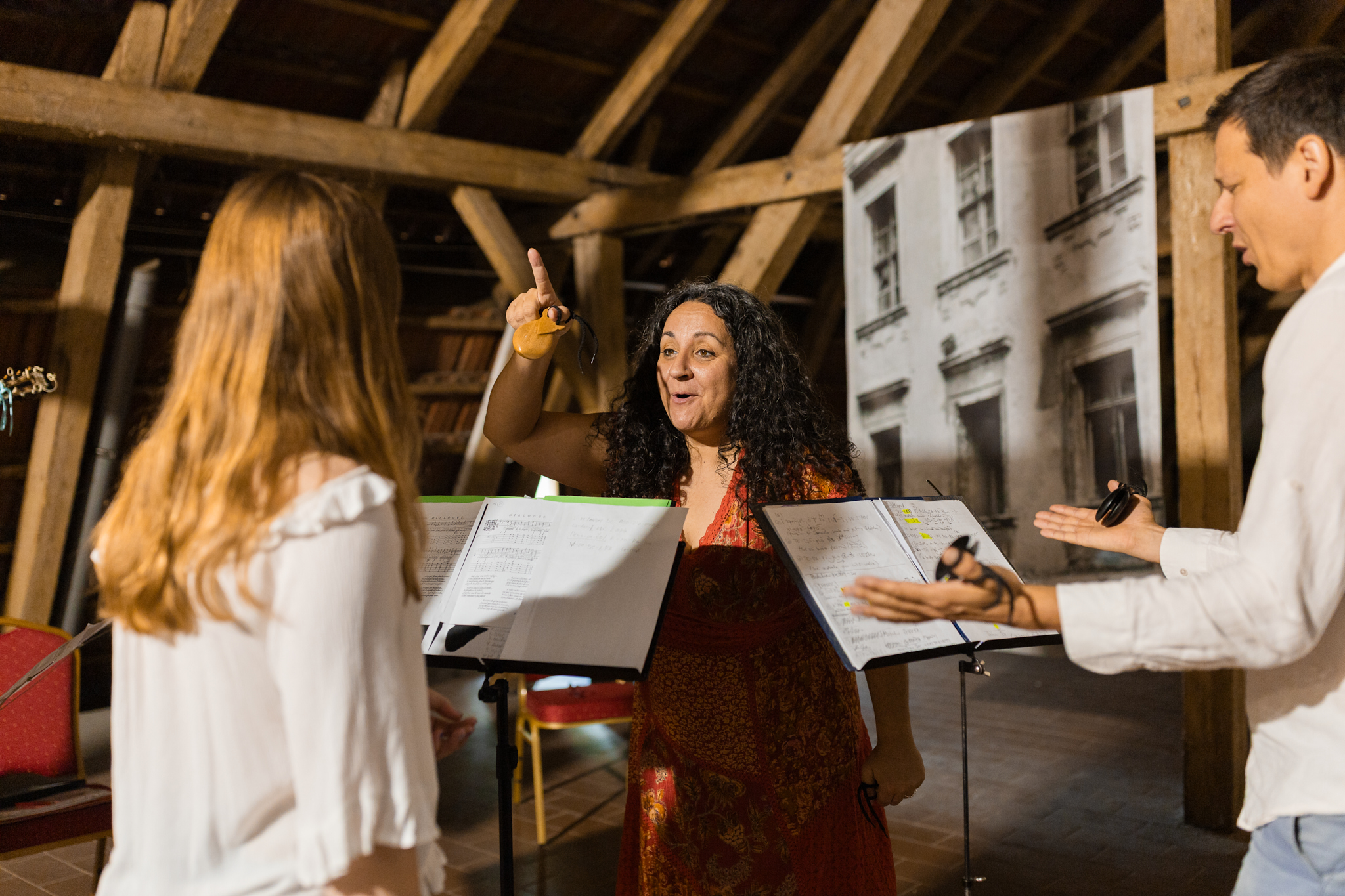
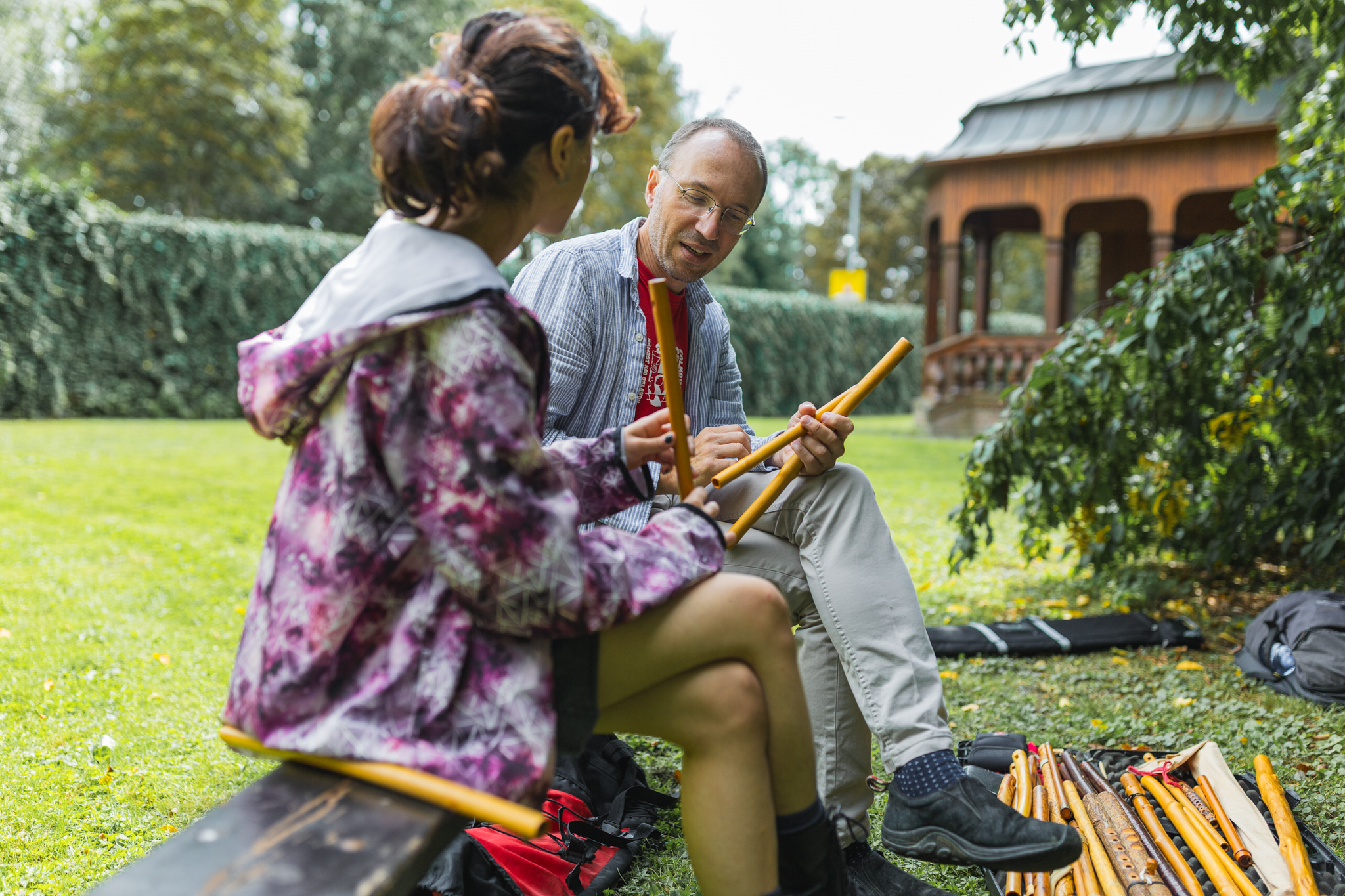
You can find the daily updated schedule at the link below. Please always check in advance whether there has been a change in the location or time of your lesson!
—LINK NOT ACTIVE YET—
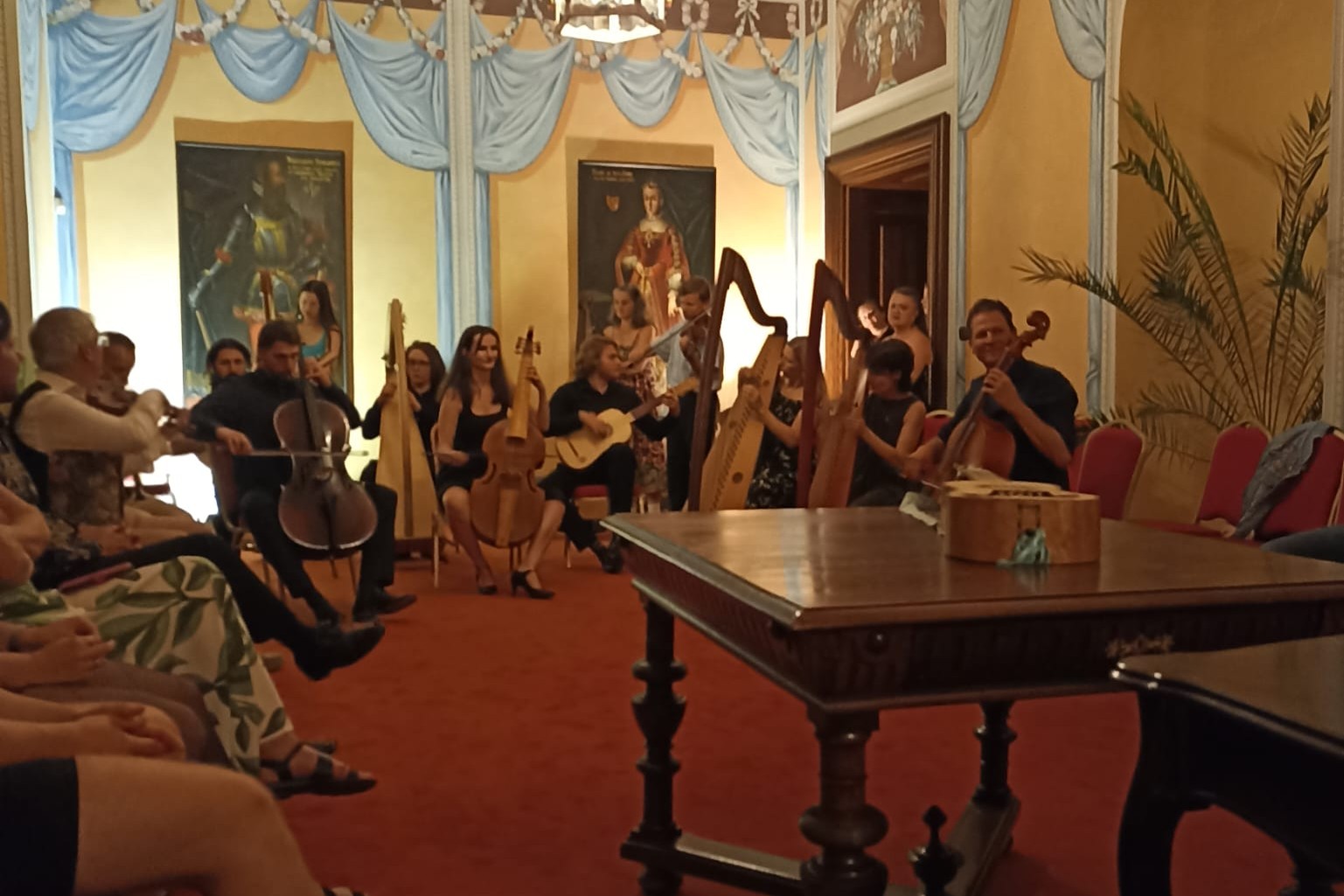
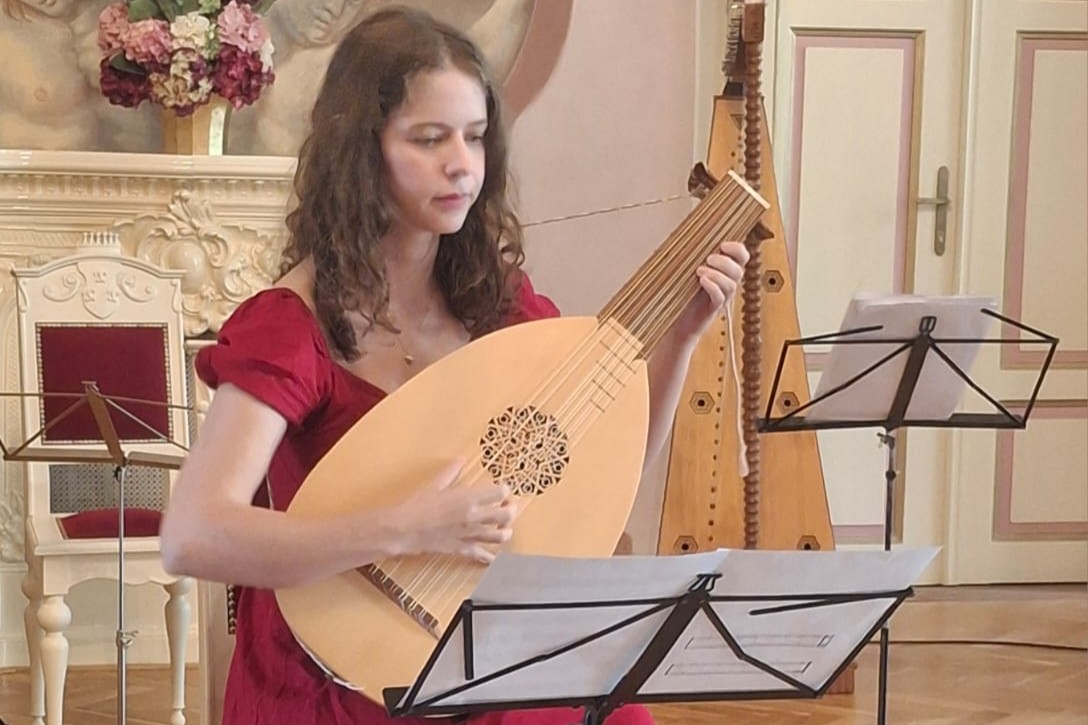
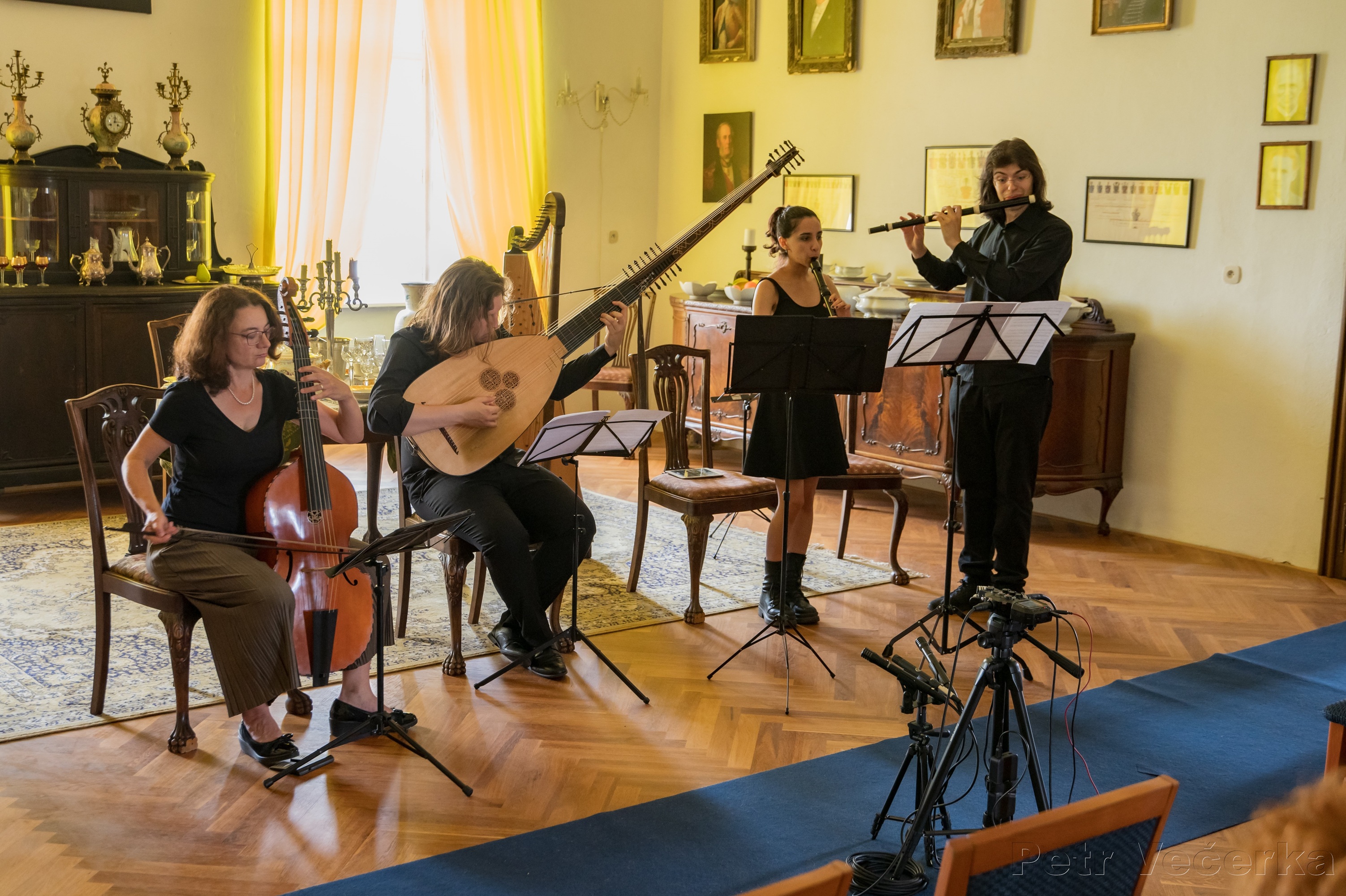
(preliminary plan)
We are planning seven concerts in Kunín and the surrounding area:
– Kunín Castle – opening concert of the lecturers
– Bílovec Castle – concert of participants
– Nová Horka Castle – concert of participants
– Janovice u Rýmařova Castle – concert of participants
– Hradec nad Moravicí Castle – concert of participants
– Raduň Castle – concert of participants
– Kunín Castle – closing concert of the participants
ACCOMMODATION:
We are offering accommodation in two dormitories of the University of Veterinary and Pharmaceutical Sciences Brno, rather modest housings with 3 to 6 beds in one room. If possible, we will try to avoid occupying the rooms fully. Sanitary facilities are in the corridor, there is access to little kitchen.
Price per person / per night: €13 (320 CZK)
We can also recommend you other accommodation possibilities in the area, but they are usually within driving or cycling distance.
MEALS:
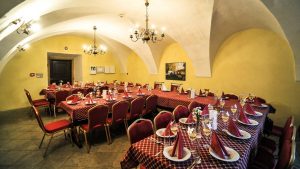
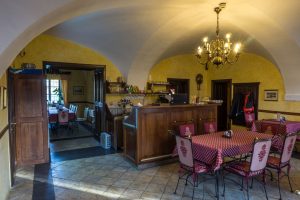
Restaurant “U Dobré hraběnky” right in the Kunín château www.dobrahrabenka.cz.
Breakfast: buffets: €6 (150 CZK)
Lunch: soup + choice of 4 main dishes: €7 (175 CZK)
Dinner: choice of 3 main dishes: €7 (175 CZK)
> Accommodation at the dormitory + full board: €33 (820 CZK) per person/day
Meals will be ordered in advance from the menu that will be sent to participants after the registration of the application form.
Payment for accommodation and meals is added to the course fee.
Please complete the online application form or contact us at musacad@email.cz. After we receive your application, you will receive the calculation and payment information from us. The application is considered binding after receiving your payment, no later than 12. 7. 2026. For better course planning, we welcome payment of the fee as soon as possible. All registrations received and paid before 1. 4. 2026 are eligible for the early bird 20% discount.
The minimum tuition fee serves also as an administrative fee and is nonrefundable.
In the case of cancelling the courses from our side, all the fees will be returned, inluding the administrative fee.
In case of cancellation from your side we normally retain 40% of the payment for the course fee and accommodation as a cancellation fee, the payment for the board is fully refundable. However we are treating every situation separately.
The event is organised by:
HUDEBNÍ LAHŮDKY, z. s.
Kociánka 69/25b, CZ-612 00 Brno, IČO: 22719458
Contact e-mail for information about courses: musacad@email.cz
Bank details (fees for the summer courses): Fio banka, a.s., Praha, BIC: FIOBCZPPXXX
account in CZK: 2000181883/2010 IBAN: CZ6020100000002000181883
account in EUR: IBAN: CZ2220100000002600181887
and
ČESKÁ LOUTNOVÁ SPOLEČNOST, z. s.
Kociánka 69/25b, CZ-612 00 Brno, IČO: 07090188
e-mail: czlutesociety@gmail.com, web: www.lute.cz, Facebook: lute.cz